
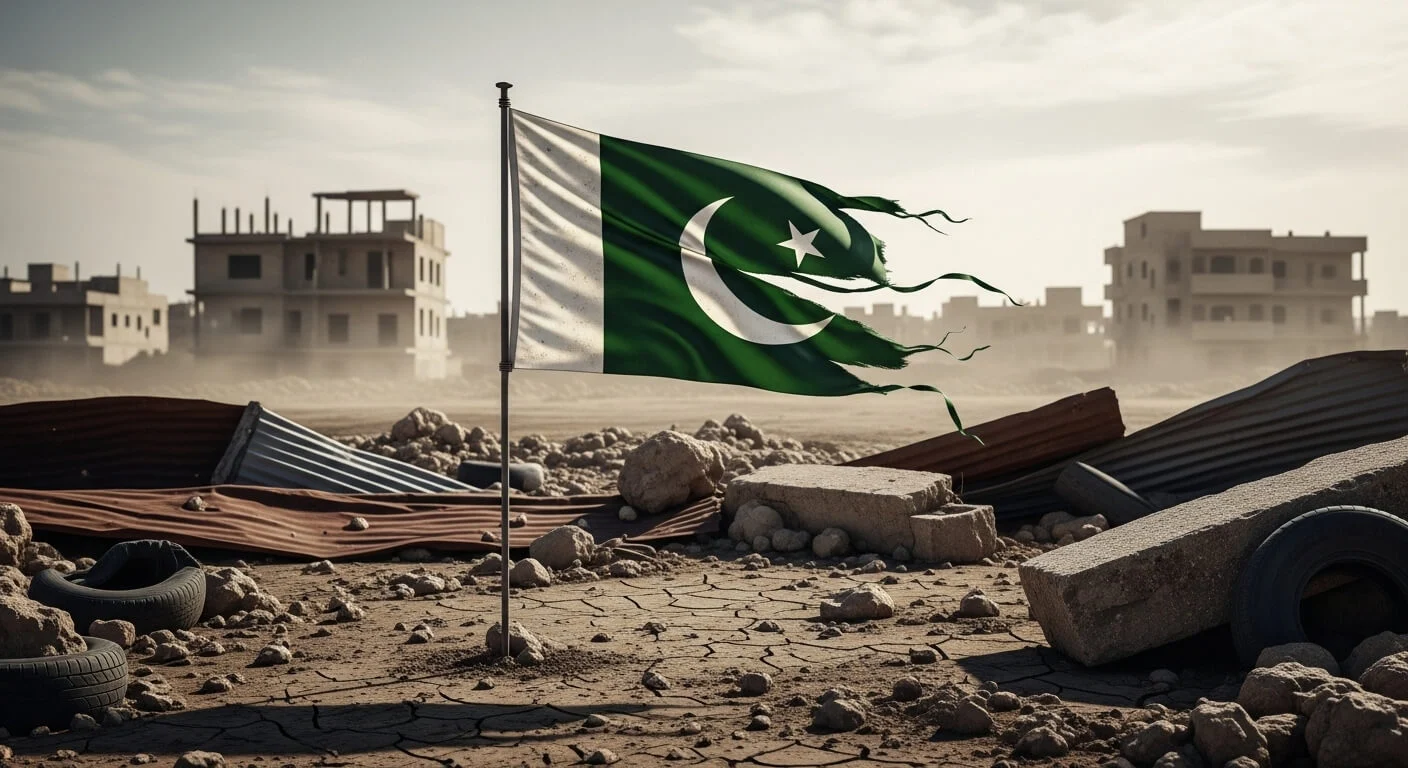
In August 1947, a new nation, Pakistan, emerged on the world map, born from the partition of British India. It was a moment of immense hope and aspiration for millions. Yet, over seven decades later, the narrative of Pakistan has often been intertwined with a persistent and often perplexing challenge: its struggle for growth. This isn’t merely about economic indicators; it encompasses the multifaceted development of a nation, its institutions, its people, and its place in the global order. Understanding this “uncomfortable truth” requires a candid look at the historical, political, economic, and social currents that have shaped its trajectory.
From the initial euphoria of independence, Pakistan embarked on a journey fraught with internal complexities and external pressures. While some periods have witnessed spurts of progress, the overall trend has been one of uneven development, missed opportunities, and a continuous battle against systemic issues. This article delves into the core reasons behind Pakistan’s struggle for growth, examining the intricate web of factors that have contributed to its developmental challenges and exploring the path forward for a nation striving to fulfill its immense potential.
Table of Contents
The Genesis of the Challenge: Partition’s Legacy and Early Years
The very birth of Pakistan was steeped in unprecedented challenges. The partition of India led to one of the largest mass migrations in human history, with millions of refugees flooding into the newly formed nation, requiring immediate rehabilitation and integration. The fledgling state inherited a fragmented administrative structure, a largely agrarian economy, and a severe lack of industrial infrastructure. Key institutions, including a robust bureaucracy, an established military, and a functional judiciary, had to be built almost from scratch.
Beyond the immediate humanitarian crisis, Pakistan faced a geographical conundrum – two wings separated by over a thousand miles of hostile Indian territory. This made administrative cohesion and economic integration incredibly difficult. East Pakistan (now Bangladesh) felt increasingly marginalized, leading to deep political and economic grievances that would eventually culminate in its secession in 1971. In the early years, political leadership was often unstable, marked by frequent changes and a struggle to establish democratic norms, laying the groundwork for future challenges in governance and policy continuity.
Read also: The Naked Truth: How Bollywood Navigates Nudity, Sensationalism, and Controversial Themes to Attract Viewers (Nudity in Bollywood)
Initial Economic Structure and Resource Constraints
At independence, Pakistan was predominantly an agricultural economy, with limited industrial capacity. The areas that formed Pakistan were largely raw material producers for the industries located in what became India. This meant a severe shortage of capital, skilled labor, and entrepreneurial expertise. The government had to grapple with the monumental task of building an industrial base, developing infrastructure, and creating educational institutions with very limited resources, often relying heavily on foreign aid from the outset. This initial dependency would become a recurring theme in its economic narrative.
Economic Hurdles: The Core of Pakistan’s Struggle for Growth
At the heart of Pakistan’s struggle for growth lies a complex array of economic challenges that have persisted across decades. These are not isolated issues but interconnected problems that create a cycle of underdevelopment and instability.
Chronic Fiscal Imbalances and Debt Accumulation
Pakistan has consistently grappled with chronic budget deficits, where government expenditure far outstrips revenue collection. This has led to a heavy reliance on borrowing, both domestic and external, pushing the national debt to unsustainable levels. A narrow tax base, coupled with tax evasion and an informal economy, means that a significant portion of the population does not contribute adequately to state coffers. This limits the government’s ability to invest in crucial sectors like education, health, and infrastructure, which are vital for long-term growth.
The cycle of borrowing to service existing debt and finance current expenditures leaves little room for productive investment. Successive governments have found themselves caught in this debt trap, often turning to the International Monetary Fund (IMF) for bailouts, each coming with stringent conditions that, while necessary for stabilization, can sometimes impede immediate growth prospects or lead to politically unpopular reforms.
Underperformance in Key Sectors and Lack of Diversification
Despite being an agrarian economy, Pakistan’s agricultural sector often underperforms due to outdated practices, water scarcity, climate change impacts, and inadequate investment. Industrialization, while experiencing some spurts, has largely remained concentrated in a few sectors like textiles, failing to diversify into high-value-added manufacturing or technology-intensive industries. This lack of diversification makes the economy vulnerable to external shocks and limits job creation for a rapidly growing population.
Furthermore, an enduring energy crisis, characterized by power outages and high energy costs, has severely hampered industrial output and made the cost of doing business prohibitive. This directly impacts productivity, deters foreign investment, and contributes to the overall slowdown in economic activity.
Trade Imbalances and Investment Drought
Pakistan consistently faces a significant trade deficit, where imports far exceed exports. This is exacerbated by a limited export basket, lack of competitiveness in international markets, and reliance on a few traditional products. A persistent current account deficit puts pressure on foreign exchange reserves, leading to currency depreciation and inflation.
The investment climate has also been challenging. Both foreign direct investment (FDI) and domestic private investment have often fallen short of potential, deterred by political instability, security concerns, bureaucratic hurdles, and an unpredictable policy environment. Without robust investment, the economy struggles to modernize, create jobs, and expand its productive capacity.
Political Volatility: A Constant Companion to Pakistan’s Struggle for Growth
Beyond economics, political instability has been a pervasive force contributing significantly to Pakistan’s struggle for growth. The country has experienced a cyclical pattern of democratic governments punctuated by military interventions, leading to a profound lack of policy continuity and institutional erosion.
Frequent Changes in Government and Policy Inconsistency
The frequent overthrow of civilian governments, whether through military coups or political infighting, has meant that long-term development plans are rarely seen through to fruition. Each new government often brings its own set of priorities and policies, sometimes discarding or reversing the initiatives of its predecessors. This inconsistency creates uncertainty for investors, both domestic and international, and undermines the effectiveness of any strategic economic or social planning.
Weakening of Democratic Institutions and Rule of Law
The repeated interruptions to the democratic process have weakened the very institutions meant to uphold constitutional rule, accountability, and good governance. The judiciary, parliament, and civil bureaucracy have, at various times, faced challenges to their independence and efficacy. When institutions are weak, the rule of law is compromised, leading to a climate where corruption can flourish and meritocracy is undermined, further hindering development.
The Pervasive Issue of Corruption
Corruption, across various levels of government and society, has been a significant impediment to Pakistan’s progress. It diverts public funds, distorts markets, discourages investment, and erodes public trust in state institutions. Resources meant for public services, infrastructure, and poverty alleviation are often siphoned off, directly impacting the welfare of the citizenry and the nation’s capacity for sustained growth.
Social Dynamics: Population, Education, and Health
The human element is central to any nation’s development, and here too, Pakistan faces profound challenges that contribute to its struggle for growth.
Rapid Population Growth and Missed Demographic Dividend
Pakistan has one of the highest population growth rates in the world. While a large young population can be a demographic dividend, in Pakistan’s case, it has often become a burden due to inadequate investment in human capital. A rapidly expanding population strains existing resources, infrastructure, and social services, making it difficult to provide quality education, healthcare, and employment opportunities for all.
Without proper planning and investment, the potential benefits of a young workforce remain untapped, leading to high rates of youth unemployment and social unrest. This demographic pressure exacerbates other developmental challenges, making it harder to reduce poverty or improve living standards.
The Education Crisis and Human Capital Deficit
Despite efforts, Pakistan’s education system faces a profound crisis. Low literacy rates, particularly among women, a significant number of out-of-school children, and a stark disparity in the quality of education between public and private sectors, and between urban and rural areas, are major concerns. The curriculum often lacks relevance to modern labor market demands, and investment in scientific and technical education is insufficient.
An undereducated and underskilled workforce is a direct impediment to economic growth. It limits innovation, reduces productivity, and makes it challenging for the country to compete in a knowledge-based global economy. The lack of quality education perpetuates cycles of poverty and inequality.
Inadequate Healthcare and Public Health Challenges
Similarly, the healthcare system is often underfunded and overstretched. Access to quality healthcare, especially in rural areas, remains limited. High rates of maternal and child mortality, malnutrition, and the prevalence of preventable diseases indicate a significant public health challenge. A healthy population is a productive population, and deficiencies in healthcare directly impact human development indicators and the overall capacity for economic activity.
Geopolitical Pressures and Regional Dynamics
Pakistan’s geostrategic location, while offering certain advantages, has also subjected it to intense geopolitical pressures that have profoundly impacted its development trajectory. These external factors often divert resources and attention away from internal development.
The Enduring Conflict with India
The unresolved disputes with neighboring India, particularly over Kashmir, have led to a perpetual state of tension and a significant defense burden. A substantial portion of the national budget is allocated to defense spending, diverting crucial resources that could otherwise be invested in education, health, infrastructure, and economic development. This arms race not only strains the economy but also limits regional trade and cooperation, which could otherwise be a powerful engine for growth.
The Impact of the Afghan War and Regional Instability
Pakistan shares a long, porous border with Afghanistan, a nation that has been embroiled in conflict for decades. The fallout from the Afghan wars, including refugee influxes, the spread of extremism, and cross-border terrorism, has had immense social, economic, and security costs for Pakistan. The “War on Terror” further destabilized parts of the country, impacting foreign investment and tourism, and costing Pakistan billions in economic losses and human lives.
Balancing Strategic Alliances and External Influence
Pakistan’s strategic location has also made it a key player in various global alliances, often leading to reliance on external powers for economic aid and military assistance. While providing short-term relief, this dependency can sometimes come with geopolitical strings attached, limiting policy autonomy and making the nation vulnerable to the shifting priorities of international patrons. Balancing these alliances while safeguarding national interests and focusing on sustainable internal development remains a delicate act.
Periods of Optimism and Missed Opportunities
It would be incomplete to discuss Pakistan’s struggle for growth without acknowledging periods of relative economic buoyancy and the subsequent missed opportunities. Pakistan has experienced several phases of rapid growth, notably in the 1960s and early 2000s.
The 1960s saw significant industrialization and agricultural growth under military rule, often cited as a “decade of development.” However, this growth was largely inequitable, failing to address regional disparities and leading to the eventual secession of East Pakistan. Similarly, the early 2000s witnessed a period of robust economic expansion, fueled by structural reforms, debt relief, and increased foreign aid. Yet, this growth too proved unsustainable, often driven by consumption rather than productive investment, and ultimately derailed by political instability, security crises, and a failure to implement deeper structural reforms.
These periods highlight a critical aspect of Pakistan’s developmental challenge: the inability to translate short-term gains into sustained, inclusive, and equitable long-term growth. This often stems from a lack of political will to undertake difficult but necessary structural reforms, a failure to broaden the tax base, and an inconsistent application of economic policies across successive governments.
The Path Forward: Addressing Pakistan’s Struggle for Growth
Despite the formidable challenges, Pakistan possesses immense potential. Its large, young population, rich natural resources, strategic location, and resilient people offer a foundation for future development. Addressing Pakistan’s struggle for growth requires a multi-pronged, consistent, and long-term approach:
- Sustained Economic Reforms: This includes broadening the tax base, improving tax collection, reducing reliance on debt, privatizing loss-making state-owned enterprises, and creating a stable, predictable policy environment for both domestic and foreign investors.
- Investing in Human Capital: A national emergency should be declared for education and health. Universal access to quality education, skill development programs for youth, and robust public health infrastructure are critical for unlocking the demographic dividend.
- Strengthening Democratic Institutions and Rule of Law: Ensuring the independence of the judiciary, strengthening parliamentary oversight, empowering local governments, and implementing effective anti-corruption measures are vital for good governance and political stability.
- Population Planning: Addressing the high population growth rate through effective family planning programs and awareness campaigns is essential for sustainable development.
- Regional Peace and Integration: Reducing tensions with neighbors, particularly India, through dialogue and cooperation, and fostering regional trade blocs, can unlock new economic opportunities and redirect resources from defense to development.
- Addressing Climate Change: Pakistan is highly vulnerable to climate change. Investing in climate resilience, sustainable agriculture, and renewable energy is crucial for future stability and growth.
- Promoting Inclusive Growth: Policies must focus on reducing poverty and income inequality, ensuring that the benefits of growth reach all segments of society, especially marginalized communities and women.
The path to overcoming Pakistan’s struggle for growth is neither simple nor quick. It demands unwavering political commitment, national consensus on core development priorities, and a sustained, coherent vision that transcends political cycles. It requires a fundamental shift towards prioritizing long-term national interest over short-term political gains and a genuine commitment to institutional strengthening and good governance.
In conclusion, Pakistan’s journey since independence has been a complex tapestry of challenges and unfulfilled potential. The “uncomfortable truth” is that its persistent struggle for growth is a deeply rooted issue, stemming from a confluence of historical legacies, economic vulnerabilities, political instability, social deficits, and geopolitical pressures. However, acknowledging these truths is the first step towards charting a more prosperous and stable future. With concerted effort, strategic planning, and the collective will of its people and leadership, Pakistan can still aspire to achieve the promise of its founding and realize its full potential on the global stage.